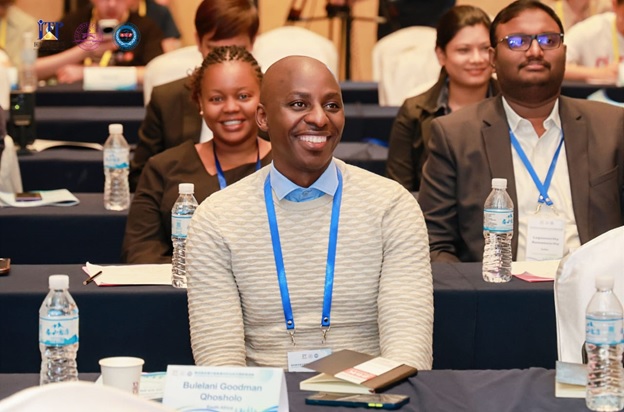
Goodman Qhsoholo, the Leprosy Mission Southern Africa’s ambassador in the Eastern Cape, attended the 4th International Training Program on Leprosy for Developing Countries from 6th – 20th September 2026. The training took place in Taishan in China, hosted by Shandong Provincial Hospital and funded by China’s Ministry of Science and Technology.
Below are some of the highlights from Goodman’s report:
The programme brought together healthcare workers, researchers and specialists from twelve developing countries. Its aim was to strengthen capacity for early diagnosis, improved leprosy control and progress towards a leprosy-free world.
A central lesson was that leprosy should be regarded primarily as a neurological disease. Damage to peripheral nerves, particularly through infection of Schwann cells, can lead to loss of sensation, muscle weakness, ulcers, infections and permanent deformities. Consequently, early neurological diagnosis and intervention are essential to preventing disability.
There are similarities between China and South Africa, including delayed diagnosis, continuing grade-two disability [meaning visible disabilities] and limited awareness of leprosy among primary healthcare workers. For South Africa, stronger political commitment is recommended, as well as greater leprosy education at tertiary institutions and the investigation of traditional medicine for the treatment of chronic ulcers.
We looked at some of the unresolved scientific questions concerning transmission, bacterial culture, genetic susceptibility, environmental and animal reservoirs, and leprosy reactions. LepVax vaccine development was discussed, including promising preclinical evidence of nerve protection and ongoing clinical trials in Brazil. Overall, the programme was considered highly valuable, providing practical ideas for strengthening leprosy control, preventing disability and improving patient care in South Africa.