This article was originally published in The Leprosy Mission’s Research Magazine for January 2026, written in collaboration with Becky Rivoire, PhD (Hope Rises International) and Veronica Schmitz Pereira, PhD (Fundação Oswaldo Cruz).
Ever since Gerhard Armauer Hansen first identified Mycobacterium leprae in 1873, there have been hopes that a vaccine could be manufactured that would allow us to end leprosy transmission forever.
Sadly, the 150+ years since then have proved less fruitful than those early pioneers may have hoped. M. leprae cannot be grown in the laboratory, making classic vaccine development extremely difficult. This single fact has shaped everything since.
There have been attempts to create a leprosy vaccine, but so far the closest thing to an effective leprosy vaccine is the BCG vaccine for Tuberculosis, which is still some way from providing effective protection.
It is in this context that we talk about LepVax, which may prove to be the most promising leprosy vaccine in development.
The LepVax project is a joint effort led by Hope Rises International and the Oswaldo Cruz Institute (IOC/Fiocruz) in Brazil. They are working alongside the Access to Advanced Health Institute (AAHI), the organisation that developed and owns the vaccine. Since its inception in 2002, LepVax has received funding from The Leprosy Mission and a number of other ILEP and non-ILEP partners, including GHIT.
How does this Vaccine Work?
Vaccines come in different forms and this LepVax acts differently to many of the ones we’re all familiar with, such as the Covid vaccine.
Covid Vaccines vs Leprosy Vaccine (LepVax)
There were a number of Covid-19 vaccines, but they were mostly mRNA vaccines (Pfizer, Moderna) or viral-vector (AstraZeneca).
mRNA vaccines: The mRNA in these vaccines will teach your body to create a virus or germ protein itself. When your immune system first encounters this protein, it learns how to respond through antibodies and T-cells. If you are infected in the future, your body now knows how to respond.
Viral-vector vaccines: A harmless virus is injected through the vaccine. This virus enters your cells and where the relevant protein is created. Your immune system sees this protein and then antibodies and T-cells are trained to respond, preparing them for a future infection.
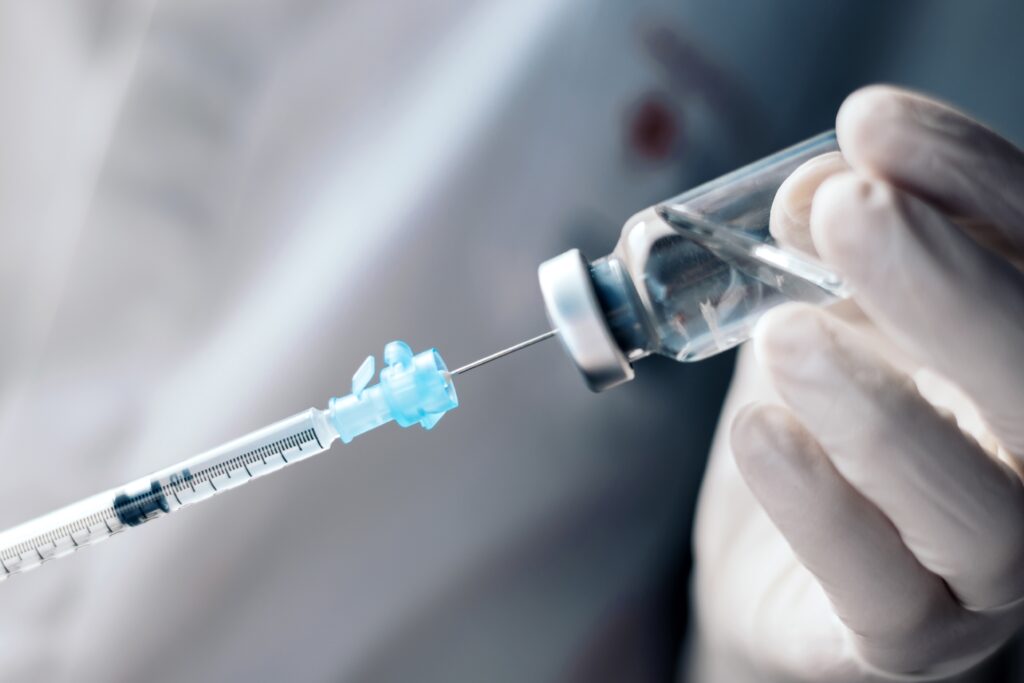
LepVax falls under a third category of vaccine: protein vaccines. The AAHI team has identified four proteins in the leprosy bacteria that trigger a protective response in patients. These proteins can be synthesised in a lab and administered through a vaccine. When this vaccine is injected, the immune system can recognise it, prompting the body to produce protection and memory against the disease.
Unlike Covid-19 vaccines, which elicit antibodies to protect against severe disease, leprosy vaccines need to train the body to mount a different type of protection, the cellular immune response. Preliminary evidence from the first human trial conducted in the U.S. suggests that this response is activated by the LepVax vaccine.
Because it is a protein-based vaccine, people receiving Lepvax don’t have a chance to get leprosy, because there is no whole bacterium in the vaccine composition.
What is the Timeline for LepVax?*
2019: Phase 1a clinical safety trials in healthy human volunteers was completed with good results for both safety and immunogenicity.
2027: We are moving into phase 1b, which would be a test of the vaccine in a small number of people at risk of leprosy in endemic areas to further test safety and efficacy.
2029: Phase 2 starts, allowing the vaccine to be tested in a larger population in Brazil, likely reaching several hundred people. This would take 18-24 months.
2031: Phase 3 could start, which would allow for a longer trial across a number of highly endemic countries such as India, Indonesia, and a number of African countries.
Mid-2030s: Because it can take up to seven years for leprosy symptoms to appear, it could take several years after 2031 before we have proof of efficacy. In the meantime, scientists will be searching for a measurable cellular biomarker that would indicate protection has been achieved without waiting for symptoms to appear.
*This is a rough timeline that could change depending on the outcomes of each phase and on funding. Phases are likely to overlap and safety will be the overriding concern throughout the process.
LepVax Could Prevent Impairments
For patients, the development of impairments is one of the most devastating consequences of leprosy, leading to life-long limitations. As is highlighted elsewhere in this magazine, it can also cause an increase in stigma.
Early results from LepVax suggest that the vaccine could be used to prevent these impairments by reducing the inflammation that happens around the nerves.
This could happen by immunising someone who is experiencing neuropathy so we reduce the impact or by immunising newly diagnosed people so that we minimise nerve involvement right from the start.
This Could Happen Soon, But Requires Funding
Although proving that LepVax can protect people from leprosy will take some time, we’ll find out much sooner if the vaccine can treat or prevent nerve damage. These results could be seen faster, as we can track the impact on neuropathy that has already begun, rather than having to wait for symptoms to appear.
Although this shows great potential and would be an enormous win for patients, the team only have limited funding and are having to prioritise efforts to prove the vaccine’s efficacy in preventing disease development because leprosy elimination remains central to global priorities.
More funding would allow for further tests into the possibility of LepVax as a solution to neuropathy.
Your LepVax Key Facts
-
LepVax is the first specific vaccine created to fight leprosy. A vaccine is essential for eliminating a disease.
Household contacts of someone with leprosy would be the primary audience, as well as other people nearby, likely running alongside the preventative medicine people already receive after being exposed.
Because people are often afraid of being judged for having leprosy, they sometimes stay hidden. LepVax could help people come forward to protect their neighbours allowing us to reach and support those who might have remained invisible.
LepVax can help to prevent impairments caused by leprosy, but we need more funding to understand this better.
The timeline for LepVax may look long, but it is very promising and could be the difference between eliminating and not eliminating leprosy. It is worth our investment.