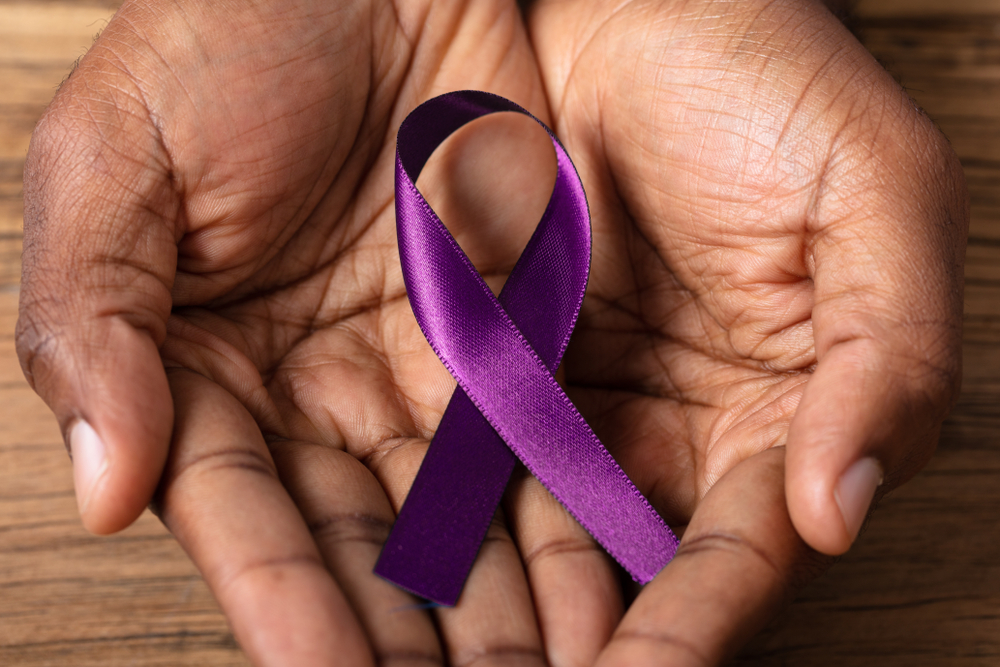
Sunday 25th January 2026 is World Leprosy Day, an occasion that is observed every year in January, with the aim of increasing awareness about leprosy. Find out more about World Leprosy Day and its significance in this blog post.
What is World Leprosy Day?
World Leprosy Day was first created by Raoul Follereau, a French writer and humanitarian who worked to promote the dignity of poor and marginalised people.1,2 It was first observed in 1954 and today it has grown to become an internationally recognised day of observance.
In most countries, World Leprosy Day takes place on the last Sunday in January.1 In India, World Leprosy Day is always observed on January 30th, a day chosen by Follereau to pay tribute to Mahatma Gandhi on the anniversary of his death.3 Gandhi was an avid campaigner for the rights and dignity of leprosy patients.4
Why is World Leprosy Day Important?
Most people believe that leprosy is a disease of the past, but it is still a modern-day reality for many and is still a widely misunderstood disease. Because of myths and misunderstandings, many leprosy patients face discrimination and exclusion5 from their communities and even their own families.
Yohei Sasakawa, WHO Goodwill Ambassador for Leprosy Elimination, had the following to say about this discrimination in this message for World Leprosy Day 2026:6
“One of the most stubborn challenges that I encounter on my travels is the social stigma attached to leprosy, which can be more problematic than the disease itself, and which can persist beyond the end of treatment. This is particularly true for people who have been left with residual disabilities as a result of leprosy. They may face various forms of discrimination, including forced divorce, lost educational opportunities and unfair dismissal. Even after being cured, they endure the unending pain of social exclusion.
I sometimes wonder if discrimination in human society originated from a fear of leprosy. One of the oldest known infectious diseases, leprosy is mentioned in the Bible and other ancient texts. Prejudices that have built up over more than 2,000 years are still deeply ingrained.”
The aim of World Leprosy Day is to create awareness about leprosy and fight the stigma attached to it, by helping communities around the world to understand the truth about leprosy.3
Read Yohei Sasakawa’s full message here.WHO Renews Committment to a World Without Leprosy
The World Health Organization reports that efforts to eliminate leprosy have reduced the number of new cases in many areas. However, 172,717 new cases were detected worldwide and reported to the WHO in 2024.7
For the past 25 years, the WHO has collaborated with Novartis to provide free multidrug therapy (MDT) to all leprosy patients. The two partners recently extended a Memorandum of Understanding for an additional five years (2026−2030). The extension makes provision for the continued supply of MDT. It also includes funding for the procurement and distribution of single-dose rifampicin for post-exposure prophylaxis (PEP).7
Dr Jeremy Farrar, WHO Assistant Director-General for Health Promotion, Disease Prevention and Care, praised the commitment of partners like Novartis. “Their steadfast support in ensuring free access to treatment has helped transform millions of lives and moved us closer to a world free from this ancient disease.” says Dr Farrar.
The work towards treating and eliminating leprosy supports the greater efforts of the WHO and other parties towards eliminating neglected tropical diseases (NTDs) as a whole. World Neglected Tropical Disease Day 2026 will be observed on Friday 30th January.7
How You Can Help
We rely on the contributions of our supporters to help us in our mission to treat leprosy. Your support makes it possible for our staff to help patients and educate more people around South Africa about the realities of leprosy today. This World Leprosy Day, make a donation to The Leprosy Mission Southern Africa, and show your support for this important cause.
References:
1. World Leprosy Day. Wikipedia. Accessed January 22, 2026. https://en.wikipedia.org/w/index.php?title=World_Leprosy_Day&oldid=1233064227.
2. Follereau, Raoul. Pajama Press. Accessed December 27, 2024. https://pajamapress.ca/creator/follereau-raoul/.
3. World Leprosy Day. World Health Organization. Accessed January 22, 2026. https://www.who.int/campaigns/world-leprosy-day.
4. Patil S, Mohanty KK, Joshi B, et al. Towards elimination of stigma & untouchability: A case for leprosy. Indian J Med Res. 2019;149(Suppl 1):S81-S87. doi:10.4103/0971-5916.251663.
5. Asampong E, Dako–Gyeke M, Oduro R. Caregivers’ views on stigmatization and discrimination of people affected by leprosy in Ghana. PLoS Negl Trop Dis. 2018;12(1):e0006219. doi:10.1371/journal.pntd.0006219.
6. Message for World Leprosy Day 2026. World Health Organization. Accessed January 22, 2026. https://www.who.int/news/item/16-01-2026-message-for-world-leprosy-day-2026.
7. WHO renews commitment to a leprosy-free world, spotlighting partnership and progress ahead of World Leprosy Day. World Health Organization. Accessed January 22, 2026. https://www.who.int/news/item/21-01-2026-who-renews-commitment-to-a-leprosy-free-world–spotlighting-partnership-and-progress-ahead-of-world-leprosy-day.